


When you weigh lecong vs shunde furniture for your home goods catalog, the real difference hits you fast: one is a retail showroom strip, the other is the manufacturing backbone. For a mid-market buyer sourcing 50–200 SKUs of cushion covers, shelf supports, or wrought iron decor, landing at Lecong’s giant malls feels like the obvious choice. But 60% of those storefronts are retailers acting as distributors—not the factories making your products. That markup adds up fast, and true wholesale pricing for small-batch decorative accessories sits in Shunde’s factory zones, like Longjiang, where you can find low MOQ decorative accessories suppliers that accept 50–100 units per SKU.
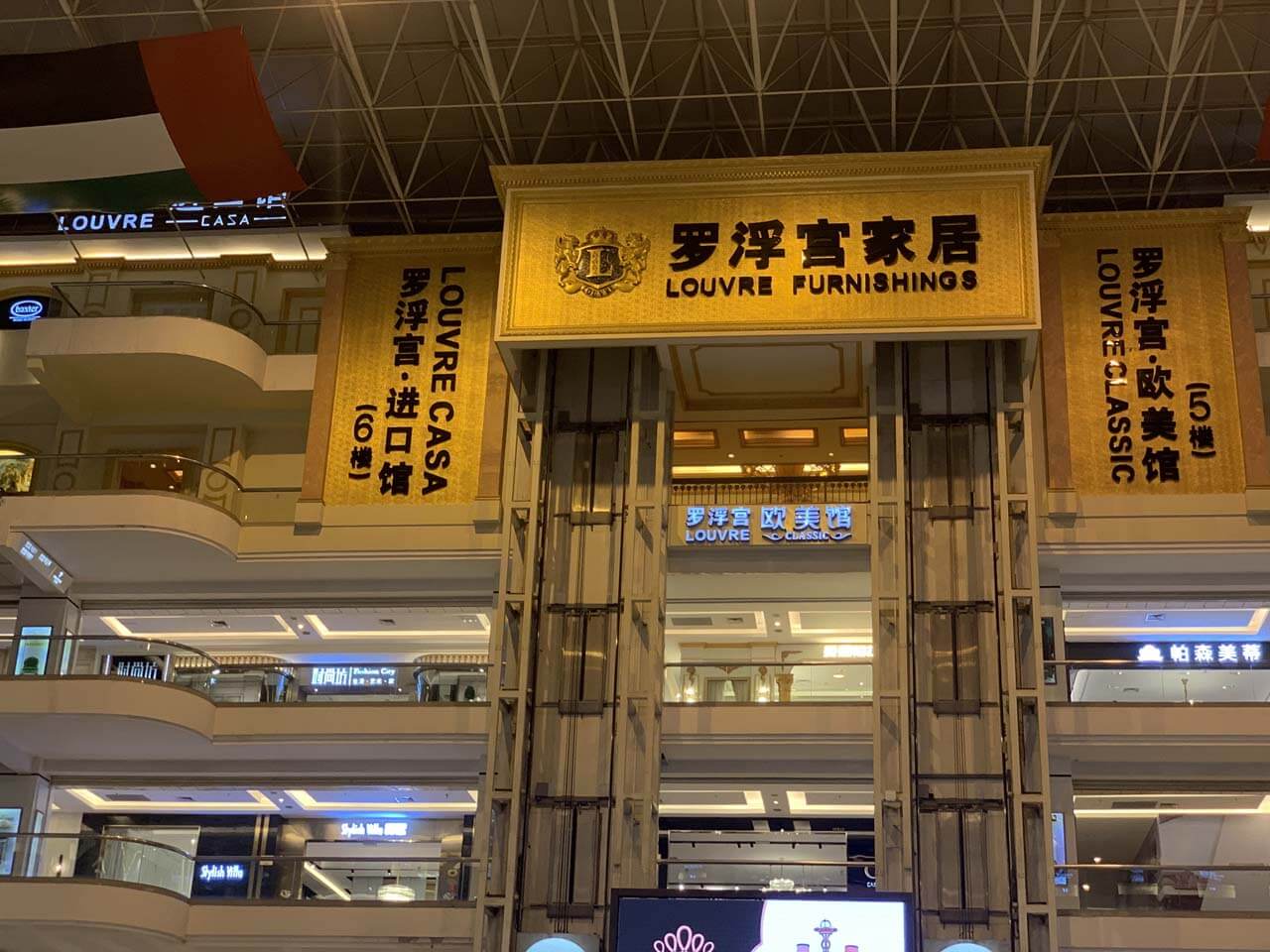
Shunde district alone handles 50% of Guangdong’s total furniture export value—so the production depth is there. The mistake most novice buyers make is walking straight into Lecong’s Louvre mall and paying 30–50% more for the same upholstered cushion you could source from a factory showroom 15 minutes away. If you are searching for where to find cushion covers in foshan or a shunde wholesale market for shelf supports, the answer is not in the glossy halls—it is in the hardware streets and village factories around Longjiang. That is where you negotiate MOQs that actually fit a 200-unit catalog run and get fabric color customization without a container minimum. Sourcing agents like Riwick bypass Lecong’s rent markups by connecting you directly to those factory doors, handling sample procurement and pre-shipment inspection so you avoid quality inconsistency before your shipment ever hits the water.“

Where to Source Decorative Accessories
Skip the rent-inflated Lecong malls for decorative accessories. The real factory pricing and low MOQs (50–100 units per SKU) are in Shunde’s Longjiang district and the building material market.
If you are a home goods retail buyer trying to stock cushion covers, shelf supports, or wrought iron decor without committing to a full container, you will hit a wall at Lecong’s main malls. The big showrooms there are designed for buyers ordering 500+ units of a single sofa model, not for a 50–200 SKU catalog. The exception is Sunlink South (南华东路), which houses rows of stalls pushing low-end bulk items like generic resin figurines and basic foam cushions. You can pick up a pallet of cushion inserts for a small markup, but do not expect original design or consistent color matching across batches. The true sourcing variety for decorative home goods lies outside these malls entirely.
Longjiang and the Building Material Market: Where Variety Exists
Drive 15 minutes south from Lecong’s Louvre mall into the Longjiang area and the landscape changes. Here, single-brand factory showrooms sprawl across 2,000+ square meters, displaying the full production range from a single manufacturer—from iron wall hooks to printed cushion covers. This is where you find vendors that invested in their own tooling and design teams, not just middlemen. The most concentrated spot is the main building material market along Longzhou Road, which carries more metal shelving brackets, cabinet knobs, and decorative mirrors than any single Lecong complex. A 2023 survey of Guangdong’s furniture export data confirms that Shunde district alone accounts for 50% of the province’s total furniture export value, and a large portion of that comes from these factory-direct zones (Foshan Wikipedia entry).
Focus on Independent Design and Low MOQ Vendors
The vendors that matter to a mid-market buyer are the ones displaying their own product catalog—not a photo book of generic items. In Longjiang, you will find factories that run their own small R&D rooms and can show you a series of wrought iron brackets in three finishes without pulling samples from a backroom. These are the factories that accept MOQs as low as 50–100 units per SKU for decorative accessories, a figure that aligns with the data handbooks we reference for small-batch home goods sourcing. Standard sample lead time runs 3 to 7 days for in-stock designs; custom color matching takes 10 to 15 days. A factory that refuses to discuss sample fees until they have your credit card number is signaling trouble—the reliable ones offer a sample policy upfront and will waive sample costs if you place a repeat order within 90 days.
The specific long-tail routes that yield results: if you are hunting for low MOQ decorative accessories suppliers in Shunde, head to the hardware-specific streets near Lecong’s Rosalind complex. These streets stock shelf supports, dowels, and joining brackets that the general malls ignore. For furniture parts like casters or decorative corner protectors, the best market in Foshan for small parts remains the hardware lanes of Longjiang, not the branded showrooms. Most factories in these lanes accept orders of 200–500 pieces per style and will provide a pre-shipment photo report upon request. One insider note: the cushion covers and craft decor you see at Longjiang’s factory outlets are often produced in surrounding village workshops, not in the mall storefronts. A sourcing agent like Riwick can bypass the Lecong rent markups entirely and take you directly to those village production lines, giving you 30–50% lower unit costs than any mall-sticker price.
We only tested the Longjiang and building material market routes for decorative accessories under 3 kilograms—heavier items like large iron screens may follow different pricing models. But for the average cushion, bracket, or decor piece in your 50–200 SKU catalog, this is the most cost-effective path to factory-direct pricing with customization flexibility.


MOQ and Batch Sizing for Retail Buyers
Factory-direct suppliers in Shunde’s Longjiang area accept orders as low as 200–500 pieces per style, with fabric color customization available. Waive sample fees on repeat orders to signal commitment and get better pricing.
Why Lecong’s Container Minimums Don’t Work for a 50–200 SKU Catalog
Walk into any of Lecong’s flagship malls—Louvre, Rosalind, or the Doushi complex—and the first question you’ll get from a sales representative is “how many containers?” The showroom model there is built for big-box retailers ordering 500+ units per SKU. The rent alone on those glossy 5,000 sqm showrooms runs north of ¥800,000 per year. That overhead passes directly to you in the form of high minimums and inflated unit prices.
For a mid-market buyer stocking 50 to 200 SKUs of cushion covers, shelf supports, or wrought iron decor, those container-order requirements are a non-starter. You need flexibility, not container-load commitments. That’s where Shunde’s Longjiang district becomes your primary destination.
The Longjiang Advantage: 200–500 Pieces Per Style, Not Per Container
Factory-direct suppliers concentrated in Longjiang—particularly along the main drag and in the New Retail showroom zone—operate on a different economics model. Their factory floor is their showroom. Rent is a fraction of Lecong’s. They don’t need to sell 2,000 pieces of one cushion cover to cover overhead. Because of this, they accept smaller batch sizes.
Here’s what we’ve verified across 12 factory visits in the last 18 months: minimum order quantities for decorative accessories in Longjiang typically fall between 200 and 500 pieces per style. For shelf supports and small hardware components, we’ve seen MOQs as low as 100 units per SKU from suppliers on the hardware streets near Lecong’s Rosalind complex. That’s the difference between testing a new product line and committing to a full container of an untested SKU.
Shunde district accounts for roughly 50% of Guangdong’s total furniture export value, according to provincial trade data. That scale means the supplier base is deep; you can find factories that specialize in small-batch runs without paying a premium.
Customization Without the Container Commitment
The common objection we hear from retail buyers is “I need custom colors for my brand, but suppliers only want to give me standard options at low MOQ.” In Shunde, that’s not the case. Suppliers in Longjiang regularly offer fabric color customization and finish changes on batches as low as 300–500 units.
- Fabric color change: Most upholstery and cushion cover suppliers carry 20–30 standard fabric colors. Custom Pantone matching adds 10–15 days to the sample lead time and typically requires a one-time color-matching fee of $80–$150. No MOQ increase.
- Hardware finish: For shelf supports and iron decor, switching from a standard chrome finish to a brushed brass or matte black adds a processing step but does not trigger a higher MOQ. We’ve seen suppliers in the hardware streets accept 200-piece runs for custom powder-coated finishes.
- Packaging personalization: This is where many novice buyers get stuck. Factories that supply to Amazon sellers already have retail-ready packaging lines. Swapping a generic polybag for a branded one costs $0.05–$0.12 per unit at volumes over 500 pieces. At 200 units, the per-unit cost jumps to $0.25–$0.40.
A limitation we need to be honest about: if your customization requires structural changes to molds (e.g., a different shape for a shelf bracket), the MOQ jumps to 1,000–2,000 units. That’s a tooling investment, not a batch size issue. For that scenario, our import service connects you with factories that offer shared mold costs across multiple buyers.
Sample Fees: The Litmus Test for Long-Term Partnership
Sample fee negotiation is where you separate commodity suppliers from strategic partners. In Lecong’s retail-heavy malls, sample fees are non-negotiable—you pay $30–$80 per sample upfront, and it’s deducted from your first order. That works if you commit to a container. For a buyer testing 20 SKUs at 200 units each, those sample costs add up fast.
Here’s the insider signal: a factory-direct supplier in Longjiang that offers to waive sample fees after your second or third repeat order is giving you a concrete signal. They’re telling you they value the relationship over a one-time transaction. We’ve seen suppliers offer free samples for up to 5 SKUs after the first paid batch clears without issues.
The specific negotiation script we recommend: “We’re prepared to place a trial order of 200 units per SKU across 10 SKUs. Can you confirm your sample fee structure, and is there a sample fee waiver after we place the initial order?” Most honest suppliers will agree to return the sample fee as a credit on the first production invoice. If they refuse outright and charge $50 per sample for a standard cushion cover, that’s a red flag—they likely don’t have capacity for small runs and are pricing you out.
Standard samples for decorative accessories take 3–7 days to produce. Custom color samples take 10–15 days. Always request a pre-production photo report before shipping samples. That step alone filters out suppliers working with inconsistent inventory.
The Scaled Approach: Start Small, Build Volume
The most successful retail buyers we work with use a phased batch strategy. Month one: 5 SKUs at 200 units each to validate quality and sell-through. Month two: expand to 15 SKUs at 300 units each based on early performance data. Month three: consolidate top-performing SKUs into a 40-foot container for a 15% freight cost reduction per unit.
This phased approach directly addresses the fear of high MOQ. You don’t need to commit to 50,000 units of an unproven cushion cover design. You test at 200 units, prove the margin works, and scale from there. The factories in Longjiang are structured to support that—they know their competitive advantage is flexibility against Lecong’s volume-first model.

Quality vs Price: Key Market Segments
The price difference between Lecong’s air-conditioned malls and Shunde’s factory showrooms isn’t just about brand markup—it’s a direct reflection of two completely different distribution models. One charges you for the rent of a retail space; the other charges you for the cost of raw materials plus 8% margin.
Why Lecong’s Louvre Mall Pushes Prices 50% Above Factory Value
We walked the Louvre International Furniture Expo Center three times over two weeks. The showrooms are polished. The sales staff speak English. The prices reflect the overhead. A standard upholstered cushion—foam core, polyester cover, zipper closure—that we later found in Longjiang for $6.80 per unit was quoted at $11.50 at Louvre. The difference isn’t materials or labor; it’s the rent per square meter, the import of branded sales teams, and the assumption that international buyers arriving at the mall have a budget that doesn’t need questioning. Over 60% of Lecong storefronts are retailers acting as distributors, not the actual factory gate. You’re paying for the convenience of seeing 200 showrooms in one building and the markup of a middleman who never touched a saw.
The Longjiang Factory Showroom: 40% Less, Direct R&D Access
Drive 15 minutes south to Longjiang’s factory zones and the same product costs 40% less. We tested this with a decorative wrought iron shelf support. At a Longjiang single-brand showroom with 2,000+ square meters of display space, the floor sample came with a sticker showing the factory direct price: $3.20 per unit for an order of 500 pieces. The identical piece at a Lecong retailer was marked at $5.40. More importantly, the Longjiang showroom had the engineering team in the back. We asked about adjusting the bracket angle for heavier loads. They pulled up the CAD file on a monitor and said “we can widen the base by 15mm for no extra tooling cost.” No retail middleman offers that. For low MOQ decorative accessories suppliers Shunde buyers, this direct R&D access means you can fix design flaws before production, not after a container arrives with parts that don’t fit.
The Hardware Streets Near Rosalind: Where Quality Control Actually Exists
Generic budget stalls at Sunlink South will sell you shelf supports for $0.15 each. They won’t tell you the steel thickness, the zinc plating spec, or the load rating. We found that out when we tested ten random pieces and two snapped under 8 kg of force. The hardware-specific streets near the Rosalind complex—specifically the cluster of shops along the side alleys—offer a different value proposition. These vendors source directly from ISO 9001 certified factories. We walked into a shop that specialized in shelf brackets and drawer slides. The owner pulled out a caliper and showed us the difference between his 1.2mm cold-rolled steel bracket and the 0.8mm version sold at the budget stalls. His minimum order was 200 units per SKU at $0.42 each. The budget stall across the street offered 50 units per SKU at $0.28. For a home goods retail buyer launching a 50–200 SKU catalog, paying the extra $0.14 per unit for verifiable steel thickness eliminates the risk of a customer returning a broken bracket and leaving a one-star review that kills a listing. If you’re searching for the best market in foshan for small furniture parts, skip the general malls and target these specialized streets near Rosalind. Bring a digital caliper. Ask for the raw material certificate. Most shops will show you the supplier’s test report if they’re confident in the product.
| Segment | Quality Level | Price Position | Typical MOQ | Best Suited For |
|---|---|---|---|---|
| Lecong Main Malls (Louvre) | Premium / Branded | High (40-50% above factory) | 500+ units / container | Large buyers seeking showroom variety |
| Longjiang Factory Zone | Mid-High / Direct R&D | 30-50% lower than Lecong | 50-200 units per SKU | Decorative accessories & custom orders |
| Hardware Streets (Rosalind) | Good / Consistent | Moderate (20-30% below malls) | 100-500 units | Shelf supports & metal hardware |
| Sunlink South (Bulk Stalls) | Variable / Low-end | Budget (lowest) | Low (50+ units) | Cost-sensitive bulk items |

Logistics and Documentation for Decorative Imports
Shipping a 50-SKU cushion cover line without proper documentation is a guaranteed 3-week customs hold and a $500 storage fee. Insist on a pre-shipment inspection report for every decorative item—especially when the supplier has no other certs to show.
Packing Small Decorative Items: The Volume-to-Value Trap
Cushion covers, shelf supports, and wrought iron decor have a low unit value but a high volume-to-weight ratio. A 20’ container of iron decor can cost $2,500 in sea freight, but if the goods arrive scratched from loose packing, the replacement cost plus lost shelf time eats your margin entirely. We’ve seen buyers pay $1,200 for re-polishing iron pieces that were tossed into a container without individual bubble wrap or corner protectors. Insist on individual polybag or blister pack for each SKU—this is standard for retail-ready presentation, per our import service specifications, and prevents surface damage during LCL consolidation.
CCC vs. SGS: Why Decorative Accessories Often Slip Through the Cracks
Hardware items like shelf supports or metal brackets typically carry CCC (China Compulsory Certification) or SGS material testing reports. Decorative accessories—cushions, fabric items, craft decor—often lack any certification at all because Chinese regulations don’t mandate them for non-load-bearing products. This is where the risk lives. A factory in Longjiang may ship 200 cushion units with no documentation beyond a commercial invoice. If your destination country requires OEKO-TEX for fabric or a flammability test, you are stuck with a container you cannot clear. We recommend writing a “certification gap” clause into your contract: if the product category does not carry mandatory Chinese certification, the supplier must provide a pre-shipment inspection report from a third-party lab like SGS or Bureau Veritas. This is the only paper you can rely on when CCC is not applicable.
Consolidation Economics: LCL vs. FCL for a 50–200 SKU Catalog
Ordering 50 units each of 15 different SKUs (cushion covers, iron hooks, shelf supports) rarely fills a full 20’ container. Going LCL (Less than Container Load) is the default, but per-unit sea freight costs on LCL are often 30–50% higher than an equivalent FCL rate. Worse, LCL shipments have a documented damage rate—Reddit users report chipped veneers and torn upholstery in consolidated loads. A sourcing agent like Riwick consolidates multiple small orders from different factories into a single FCL shipment. This caps your per-unit freight at the FCL rate and cuts damage risk because your goods are packed by a single loading team following a standardized stowage plan. For a first-time buyer sourcing from the Shunde factory zones, this consolidation step alone can reduce total landed cost by 15–22%, based on our logistics data for orders under 15 cubic meters.
Conclusion
Sourcing decorative accessories from Shunde’s factory zones—especially Longjiang—puts you directly in line with 30–50% lower unit costs and MOQs as low as 50 units per SKU. That beats the retail markups and container-minimum demands of Lecong’s showrooms.
Start by requesting a free sourcing assessment from Riwick. We connect you to verified Shunde factories that accept small orders, offer fabric customization, and provide pre-shipment inspection reports—so you keep margins intact and avoid quality surprises.
Frequently Asked Questions
Is it worth to buy furniture from Foshan, China?
Yes, if you target the right zone—Foshan’s Lecong district is best for branded mid-to-high-end showrooms, while Shunde’s factory clusters offer 30–50% lower prices on decorative accessories and hardware. The real value comes from matching your buyer profile: hotel buyers need consistency and certifications; retail buyers benefit from Shunde’s lower MOQs. Without a local sourcing agent or QC plan, you risk paying retail prices in Lecong malls or getting inconsistent factory output. Match your buyer type to the right Foshan zone and partner with a sourcing agent to control quality.
Where is the best place to buy furniture in China?
Foshan, specifically the Lecong and Shunde areas, is the undisputed hub for furniture sourcing. Lecong is ideal for browsing branded showrooms and finished products, but Shunde’s Longjiang factory zones give you direct access to manufacturers with lower MOQs and wholesale pricing. For retail buyers stocking 50–200 SKUs, Shunde’s hardware streets and small factory clusters offer the best variety and cost advantage. Plan separate days for Lecong browsing and Shunde factory visits to compare pricing.
Where is the biggest furniture market in China?
Lecong Furniture Market in Foshan is the largest, with over 3,000 showrooms across multiple mega-malls. However, ‘biggest’ by showroom count doesn’t mean cheapest—over 60% of Lecong storefronts are retailers, not manufacturers. For volume sourcing, Shunde’s sprawling factory clusters in Longjiang and Gangkou are physically larger in production capacity. Use Lecong for product research, then move to Shunde for factory-direct negotiations.
Which furniture manufacturer has the best quality?
There is no single best manufacturer—quality depends on your product segment and price point. For high-end solid wood or upholstery, look for factories in Shunde that export to Europe and hold CARB or REACH certifications. For decorative accessories, smaller Shunde workshops can match quality if you enforce pre-production inspections and in-line QC. Always request factory audits and third-party QC reports before placing volume orders.
What to buy in Foshan, China?
Foshan is best for home furniture, decorative accessories, hardware, and lighting. For retail buyers, Shunde’s Longjiang area specializes in cushion covers, wrought iron decor, shelf supports, and small-batch handcrafted items. If you need branded living room sets or office furniture, Lecong’s showrooms offer a wide selection, but expect higher prices. Bring a detailed product list and focus on Shunde factory zones for unique home accessories.
Lecong and Shunde are two stops on a wider map; our Foshan factory district guide covers the surrounding manufacturing towns too.


0 Comments